
 080-45889203
 EVENTS


Hidden Costs International Students Should Plan For: The Ultimate Financial Roadmap
Studying abroad is a transformative experience for international students, during which you will gain supreme academic growth and cultural immersion. The prime and essential step to start an impressive experience is to plan your finances. Excluding the tuition from the university, there are a range of hidden costs for students to focus on.
Read this article, and you can figure out why international students should focus on hidden costs, where you can save money on living expenses, accommodation costs, academic-focused study expenses, and so on. This article details these often-missed financial obligations and offers strategic advice for managing them effectively. Let’s dive in now.

Why Should International Students Focus on Hidden Costs
When you’re planning to study abroad, the first thing to do is to plan your budget. Tuition fees and rent will take up the largest chunks of your budget. But small costs matter just as much and are easily missed. That is where hidden costs occur, including visa applications, travel, extra luggage, deposits, and all the little bits of preparation you don’t really think about at the time.
Even rent, which feels like the most fixed and predictable expense, comes with its own set of surprises. Bedding, kitchen essentials, admin fees, transport links, higher energy bills in winter, or small add-ons tied to your accommodation all slowly add up.
Then there are course-related costs, such as printing, materials, society events, and group meals, none of which feel expensive on their own, but together they can quietly push you way past your original budget.
Pre-Arrival Hidden Costs: Before You Even Fly
The financial journey begins long before the flight departs. These initial costs are mandatory and often non-refundable, making accurate planning crucial.
Course Application & Academic Enrollment Fees
Beyond the main tuition deposit, universities often charge separate, non-waivable fees for processing applications, evaluating international transcripts, and confirming enrollment. These typically include Application Fees (commonly $50-$150 per institution), an Acceptance/Enrollment Deposit to hold your place, and mandatory Orientation Fees for international student programs.
Visa, Immigration and Mandatory Compliance Surcharges
The hidden costs linked to international students’ visas in the UK for 2025/2026 are a large amount and exceed the initial visa application fee. The most important surcharge is the Immigration Health Surcharge (IHS). It may cost students £776 per year. The UK’s Immigration Health Surcharge (IHS) is a multi-year, upfront payment, depending on the length of the course.
Flight Tickets and Initial Relocation Logistics
Hidden costs for international student flight tickets include excess baggage fees, seat selection for transporting essential items, airport transfers to your initial accommodation, and potential temporary accommodation if your housing contract starts after your arrival.
And in terms of initial relocation logistics, students should consider hidden costs, including SIM cards, internet connectivity, local transport, essentials such as toiletries, basic groceries, and maybe any seasonal clothing. If you want to manage these costs, just budget with some helpful budgeting apps, use student discounts, and start researching local costs early to prepare much more.
Accommodation-Related Costs
Rent is another large expense after the tuition fee, so the hidden costs related to accommodation for international students are also a big issue to focus on. Some items for you to pay attention to include utility bills, tax issues, deposits, holding fees, insurance, agents, student accommodation platforms, and move-in costs. Have a look at these accommodation-related costs, excluding your monthly rent.
The “All-Inclusive” vs. “Split Bills” Financial Reality
Despite the on-campus halls, there is a wide range of purpose-built student accommodation (PBSA) options offering all-inclusive rent, covering utilities. Conversely, private rentals require students to manage and pay for utilities separately—the “split bills” reality.
The hidden cost is the potential for utility overages, especially during colder months. Students must carefully compare the total monthly outlay, not just the base rent.
How Does Location Matter: Hidden Costs
If you, as an international student, are planning your studies in the UK, finding the right place is critical. And when you are doing the research, you may know that living near the university campus is a lively experience, enhancing your feelings in a new country and helping you save more money on travelling.
For instance, those attending the University of Glasgow can maximise their time and travel savings by booking verified student accommodation near the University of Glasgow months in advance, ensuring they stay at the heart of the student community. Similarly, students heading to the Midlands can find suitable De Montfort University accommodation that offers both proximity and transparent pricing, preventing unexpected transport expenses from inflating their monthly outgoings.
Besides, by using a trusted platform, international students can secure a home that supports a vibrant lifestyle while turning potential financial surprises into a predictable, manageable line item in their budget.
Security Deposits, Holding Fees and The Guarantor Gap
Securing a room requires upfront capital, including a security deposit, typically 4-6 weeks’ rent and a small holding fee. A major unforeseen cost is the Guarantor Gap. If a student cannot provide a local guarantor, they must often pay the entire year’s rent upfront or use a third-party guarantor service, which charges a significant fee (often 3-5% of the annual rent).
Move-in Essentials and Household Setup Expenses
Even in furnished student apartments, there are necessary setup costs for move-in essentials. These include purchasing bedding, kitchenware, pots, pans, cutlery, and small appliances like toasters or kettles. These costs can easily accumulate to several hundred dollars or pounds.
Short-Term, Summer and Gap Accommodation Costs
If a student needs to stay during the summer break or a placement year, their standard contract may not cover this period. Short-term leases are notoriously expensive, and the cost of moving and storing belongings between tenancies adds financial complexity.
Cut Hidden Student Housing Costs with uhomes.com: Your Best Platform
Navigating the complexities of international student housing requires a reliable and transparent platform. uhomes.com specialises in providing secure and verified accommodation for students across major study destinations, with a strong focus on the UK and Australia.
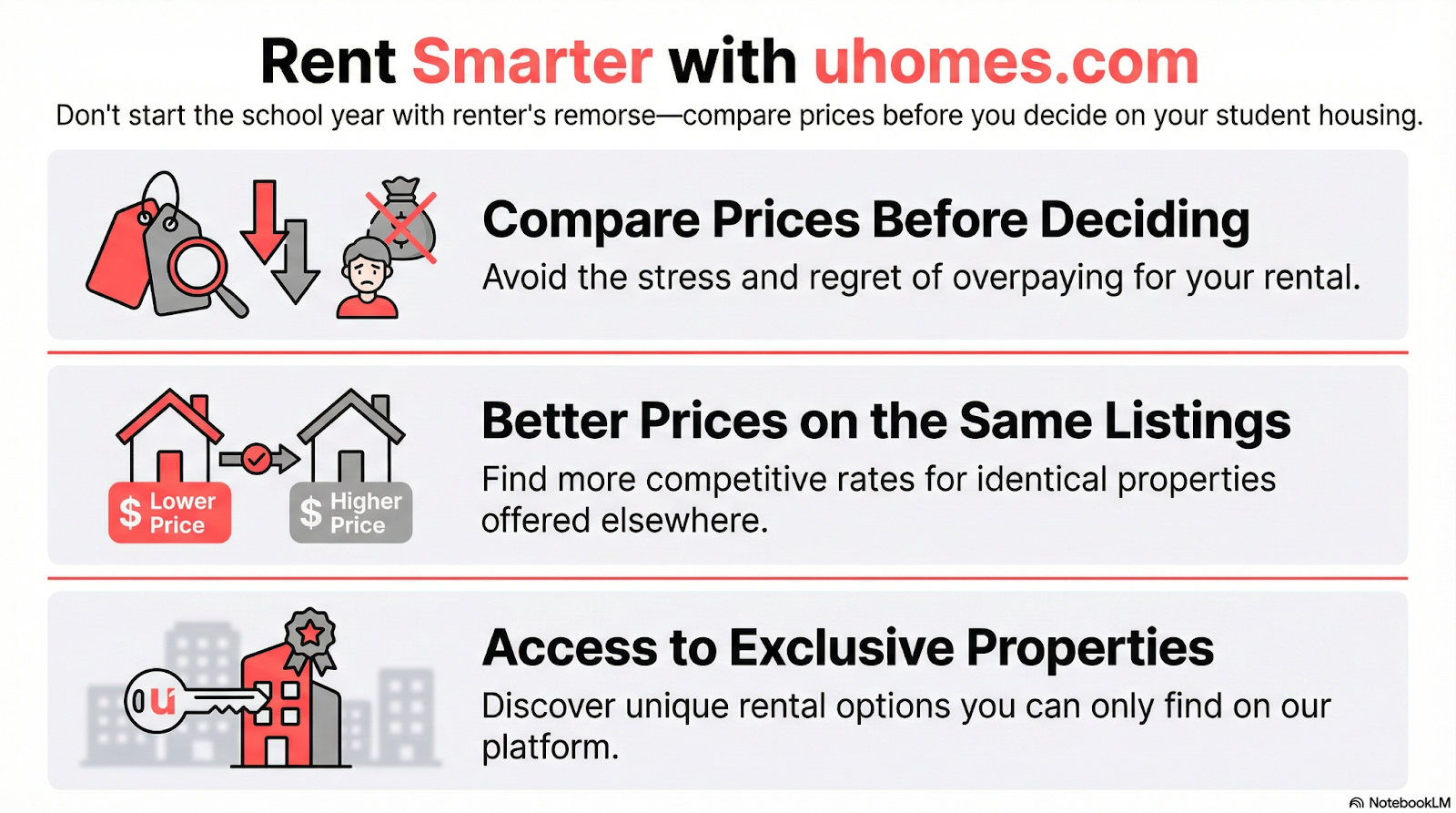
The platform’s core advantage lies in its direct partnerships with top student accommodation providers, which help mitigate several hidden costs:
- Transparent Pricing: All-inclusive pricing models are clearly displayed, eliminating utility bill surprises.
- Guarantor Solutions: uhomes.com often facilitates payment plans or offers solutions that reduce the need for expensive third-party guarantor services, directly addressing the “Guarantor Gap” hidden cost.
- Verified Listings: The platform ensures that the property details, including deposit requirements and contract terms, are accurate, preventing last-minute financial shocks.
Hidden Academic and Study-Related Expenses
Academic costs extend beyond the university’s finance office.
Textbooks, Software and Course-Specific Materials
While some courses provide digital resources, many still require expensive textbooks, often over $100 each. Furthermore, specialised courses may demand subscriptions to professional software, e.g., Adobe Creative Cloud or the purchase of specific lab equipment or art supplies. These costs are rarely included in the initial fee structure.
Printing, Lab Fees and Field Trip Expenses
Universities often charge per-page for printing, which accumulates rapidly. Lab fees can be levied separately for consumables or specialised access. Field trips, even mandatory ones, often require students to cover their own travel, food, and sometimes a portion of the activity cost.
Technology and Study Equipment Upgrades
An international student’s existing technology may not meet the demands of a rigorous university program, e.g., engineering or media. The need to purchase a new, high-specification computer, external hard drives, or noise-cancelling headphones constitutes a significant, often unplanned, expense.
Daily Living and Lifestyle “Micro-Leaks”
These are the small, recurring expenses that drain a budget over time, often referred to as “micro-leaks”.
Banking Fees, Currency Exchange & International Transfers
Using a foreign bank account or international credit cards incurs high transaction fees and unfavourable currency exchange rates. Setting up a local bank account is essential, but international money transfers from home can still involve significant hidden fees from both the sending and receiving banks. Students must research low-fee international transfer services to minimise this leakage.
Transportation Beyond Standard Student Passes
While most cities offer student travel passes, these may not cover all necessary travel. Hidden transportation costs include late-night taxis/rideshares for safety, inter-city travel for breaks, and the upfront cost of bicycle purchase/maintenance.
Clothing, Climate-Related Spending and Social Integration
Students arriving from different climates often need to purchase an entirely new wardrobe, e.g., heavy winter coats. Furthermore, social integration, while vital for well-being, carries a cost. Dining out, joining clubs, and participating in weekend trips are necessary for a full student experience, but must be budgeted realistically.
Strategic Tips to Prepare for Hidden Costs
Proactive planning is the most effective defence against financial surprises.
Build a Realistic Budget With a 15% Safety Buffer
A basic budget is insufficient. Students should create a detailed monthly budget based on real-world cost-of-living data. Crucially, add a 15% to 20% safety buffer to the total estimated annual cost.
This buffer is designed to absorb the inevitable hidden costs and unexpected emergencies, providing a cushion against financial stress.
The Financial Benefits of Early-Bird Accommodation Booking
Booking your accommodation early is a powerful financial strategy. Early-bird deals often include discounts, waived fees, or better room selection at lower prices. By securing your accommodation for students well in advance, you avoid the last-minute scramble when prices are highest, and options are limited, effectively neutralising a major potential hidden cost.
Leveraging Student Discounts and Local Deals
International Student Identity Cards (ISIC) and local student cards unlock a vast network of discounts on travel, retail, entertainment, and food. Students should actively seek out and utilise these deals, as the cumulative savings over a year can be substantial.
Many universities also offer free or heavily subsidised services, such as counselling or software licenses, which students should leverage to avoid external costs.
Setting Up an Emergency Fund Early
Beyond the safety buffer, a dedicated emergency fund, e.g., $1,000 to $2,000, should be established for true emergencies, such as unexpected medical bills or a major technology failure. This fund should be separate from the daily spending budget and only accessed in critical situations.
Study Abroad in a Smarter Way through The WorldGrad
For students seeking a structured and financially savvy pathway to international education, programs that integrate academic preparation with practical financial guidance are invaluable. The WorldGrad offers Smart Programs designed to streamline the transition to an international university, often resulting in significant cost savings and better academic outcomes.
Their offerings, such as the All American Undergraduate Program, allow students to complete up to the first year of their American bachelor’s degree remotely, saving on the high costs of international living and accommodation during the initial phase.
For those targeting top-tier UK institutions, the UK Advanced Accelerator Program is the go-to program. It allows students to complete the first two years of their international degree in 12 months. Therefore, saving on high tuition and living expenses.
By choosing a smarter, more structured path with it, students can minimise the financial risks associated with hidden costs and maximise their return on investment in international education.
Final Thoughts: Study Abroad With Fewer Financial Surprises
The dream of studying abroad should not be overshadowed by financial anxiety. By acknowledging the existence of hidden costs and proactively planning for them, international students can transform their financial uncertainty into a clear, manageable roadmap.
Utilising transparent platforms like uhomes.com for housing and adopting a disciplined budgeting approach are the keys to a financially secure and academically successful international experience.
FAQs
Q1. What are the most commonly overlooked hidden costs for international students?
A1. The most commonly overlooked hidden costs include visa-related surcharges, such as the
Immigration Health Surcharge in the UK, excess baggage fees, security deposits for
accommodation, guarantor service fees, textbooks, software subscriptions, and seasonal clothing
purchases.
Q2. How much extra money should international students budget for hidden costs?
A2. A practical strategy is to add a 15%–20% safety buffer on top of your estimated annual living and
tuition expenses. This extra amount helps absorb unexpected expenses such as medical
emergencies, technology replacement, travel changes, or higher winter utility bills.
Q3. Are UK student accommodation deposits refundable?
A3. In most cases, security deposits are refundable at the end of your tenancy, and you should offer
the certifications as follows: No damage has been caused to the property, and rent payments are fully settled, and contract terms have been followed. However, holding fees may be partially or fully non-refundable depending on the contract. Always review the deposit protection policy before signing.
Q4. How can international students reduce currency exchange and transfer fees?
A4. To minimise banking-related hidden costs, students can open a local bank account as soon as
possible, use low-fee international transfer platforms, avoid frequent small transfers and
compare exchange rates before sending money.